Quick Facts
Watch discussed: Audemars Piguet Royal Oak Offshore Selfwinding Chronograph
Original case size: 42mm
Original case materials: stainless steel and titanium
Original movement: Audemars Piguet Calibre 4404
Main comparison points: dial colour, case shape, finishing, chronograph layout and strap fit
Replica focus: visual accuracy rather than assuming genuine specifications carry over to replica versions
The Royal Oak Offshore has never relied on understatement. The broad octagonal bezel, visible screws, thick case and large chronograph counters are all part of the reason the watch is easy to recognise. They are also the reason an inaccurate version can look wrong surprisingly quickly.
The colourful 42mm watches released in 2026 make that even clearer. Pink, orange, yellow and turquoise details pull the eye towards areas that are easier to hide on a dark monochrome dial. For UK readers comparing replica watches UK, these references are useful less because they are new and more because they expose the quality of the small details.
There is one distinction worth making from the beginning. The 42mm size, genuine case materials and Calibre 4404 movement belong to the original Audemars Piguet watches. A replica based on the same design may look similar in photographs while using a different movement, different materials and different construction. Those points need to be checked separately rather than borrowed from the genuine specification sheet.
Bright Colours Leave Less Room for Mistakes
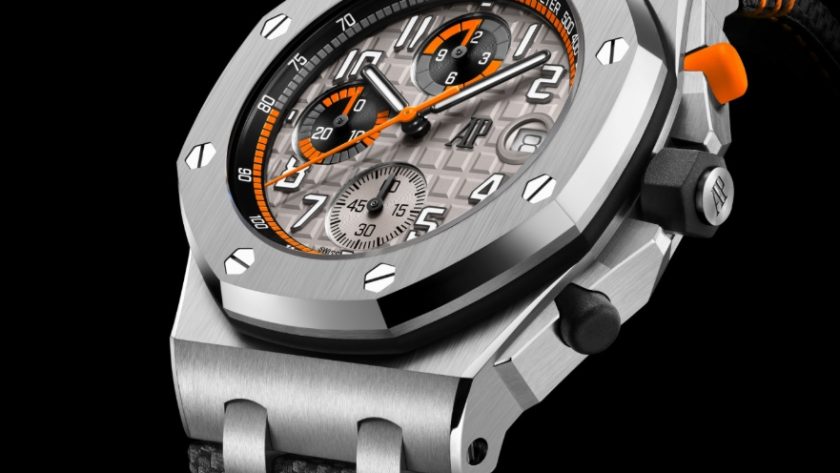
One steel version pairs a dark dial with pink accents. Another uses a lighter dial with orange detailing, while the titanium model brings yellow and turquoise into a darker grey setting. The basic Offshore shape has not been reinvented, yet the watches feel noticeably different because the colour sits in the places your eye naturally follows around the dial.
That makes colour accuracy unusually important on a replica. A black dial can sometimes disguise slightly weak printing or a small difference in surface finish. Bright pink or orange cannot. If the shade is too pale, too glossy or simply sits in the wrong place, the balance changes immediately.
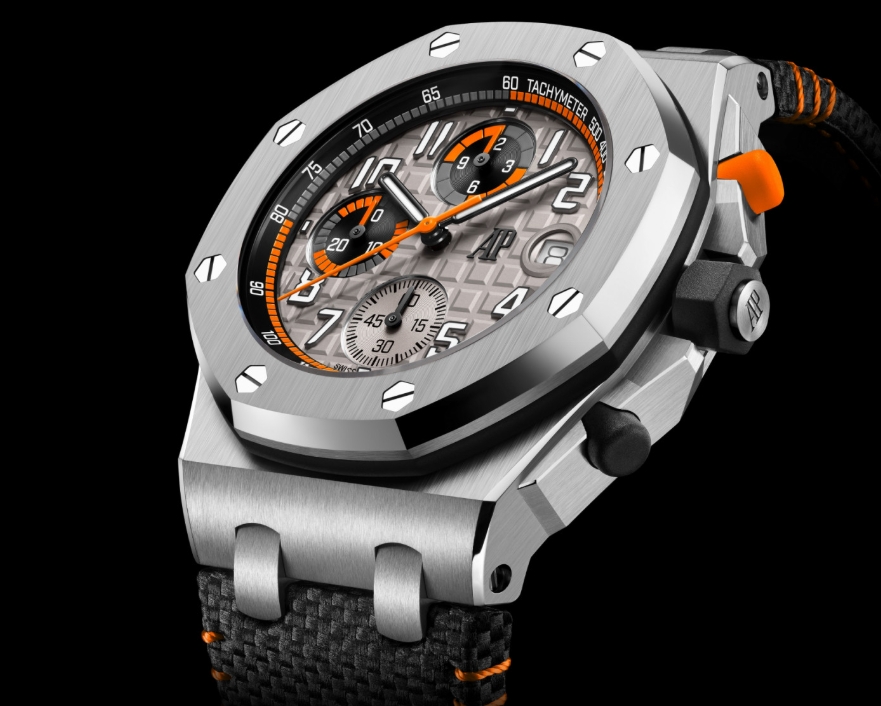
The Méga Tapisserie pattern is another area worth looking at closely. It should not read as a flat printed grid. The pattern gives the dial visible depth, and its scale has to work with the chronograph counters rather than fight against them. On a replica, Royal Oak Offshore Méga Tapisserie dial detail is often more revealing than the logo at twelve o’clock.
The counters matter for the same reason. Instead of checking only whether three subdials are present, look at how large they are, where they sit and how much space remains between them and the surrounding numerals. Small changes in spacing can make the entire dial feel crowded even when every individual component appears acceptable on its own.
The bright chronograph hands and tachymeter details make alignment easier to judge as well. On these watches, there is very little visual camouflage. That is useful when comparing photographs because you can see whether the hands reach the correct markings and whether the coloured details are consistent across the dial.
The Case Should Be Judged as a Shape Rather Than a Number
Calling the Offshore a 42mm watch does not tell the whole story. It has a broad bezel, substantial shoulders and pronounced chronograph pushers, so it carries more visual weight than many conventional round watches with the same stated diameter.
This is why 42mm Royal Oak Offshore replica case proportions are more useful than simply checking a number in a seller’s description. Look at the bezel in relation to the middle case, the height of the watch from the side, the size of the crown guards and the point where the strap meets the case.
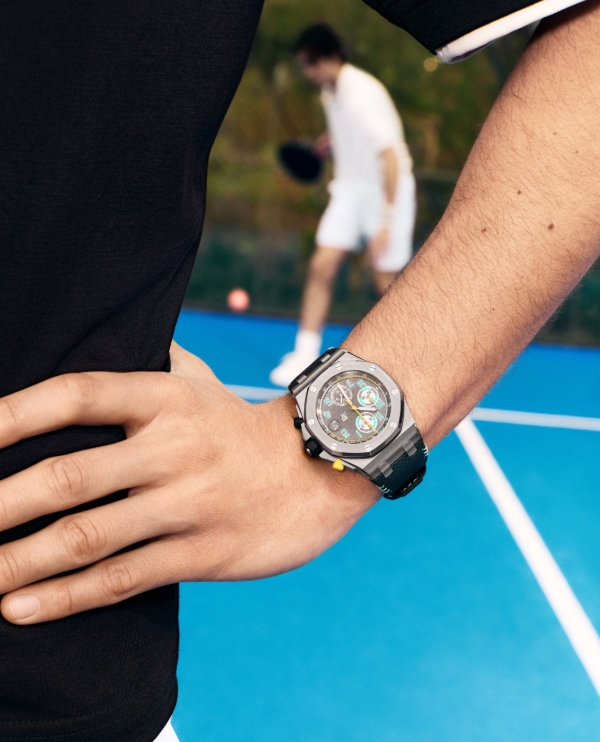
A wrist photograph is particularly useful here. Straight product photographs can make a thick watch appear flatter than it really is. On the wrist, it becomes much easier to see how far the case stands above the skin, how the strap bends away from the lugs and whether the overall proportions feel close to the Offshore design.
Finishing is equally important. The Royal Oak family depends heavily on the contrast between brushed surfaces and polished edges. Those transitions should look deliberate. Soft edges, overly shiny brushing or an inconsistent finish around the bezel can take away much of the sharp, architectural appearance associated with the design.
Material needs separate consideration. The genuine collection includes steel and titanium, but a grey appearance alone is not evidence that a replica case is actually titanium. Weight, machining and finishing can differ even when two cases look similar on screen. For that reason, Audemars Piguet replica watch case finishing should be judged independently from any claimed material specification.
The same caution applies to water resistance. Unless an individual replica has been properly pressure tested, a quoted depth rating should not be treated as proven simply because the original watch carries an official rating.
The Chronograph Reveals More Than the Colour Scheme
The genuine 42mm watches use Audemars Piguet’s Calibre 4404, an integrated automatic flyback chronograph. That information is useful as a reference for understanding the original watch, but it should not be copied into a replica description unless the actual movement inside that particular watch has been identified.
A replica can reproduce the general three counter appearance while relying on completely different mechanics underneath. Movement choice can affect case thickness, date placement, subdial spacing and even the feel of the chronograph pushers. This is why Royal Oak Offshore replica chronograph alignment deserves more attention than decorative movement plates seen through a caseback.
Look at the counters first. Their centres should sit naturally within the dial pattern. Then check the date position, the length of the chronograph hands and how the pushers line up with the case. None of these details is dramatic by itself, but the Offshore is a design where several small differences can add up quickly.
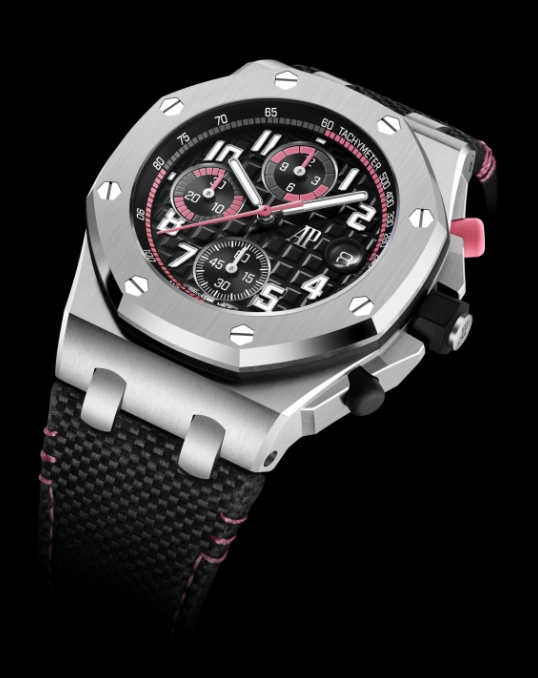
The black and pink watch shown here makes a good example. Its bright accents give the eye obvious reference points. The coloured hands, pusher detail, strap stitching and dial markings need to work together. When one element uses a noticeably different shade, the mismatch becomes easier to see than it would on an all black watch.
Strap quality should not be ignored either. Texture, stitching, flexibility and the fit against the case all influence the way the finished watch looks. A convincing case with a stiff or poorly fitted strap can still feel noticeably off on the wrist.
Readers who want to compare these details across more references can browse the Audemars Piguet Royal Oak Offshore replica section. Looking across several generations is useful because it becomes easier to recognise which features belong to the Offshore design and which differences come from individual versions.
For UK buyers, the useful question is therefore not whether a replica can repeat every number on the genuine specification sheet. It cannot be judged that way. What matters is whether the visible construction holds together when you look beyond the first impression.
Check the bezel geometry, dial texture, counter spacing, coloured details, case finishing and strap fit. Then treat movement, material and water resistance as separate claims that need their own evidence. That approach gives a much clearer picture of Audemars Piguet Royal Oak Offshore replica watch quality than relying on labels such as high grade or premium.
The colourful 2026 Offshore watches happen to make that process easier. Their design leaves fewer places for weak finishing or inaccurate proportions to hide, which makes them particularly useful reference points for anyone learning how to compare replica watches more carefully.